

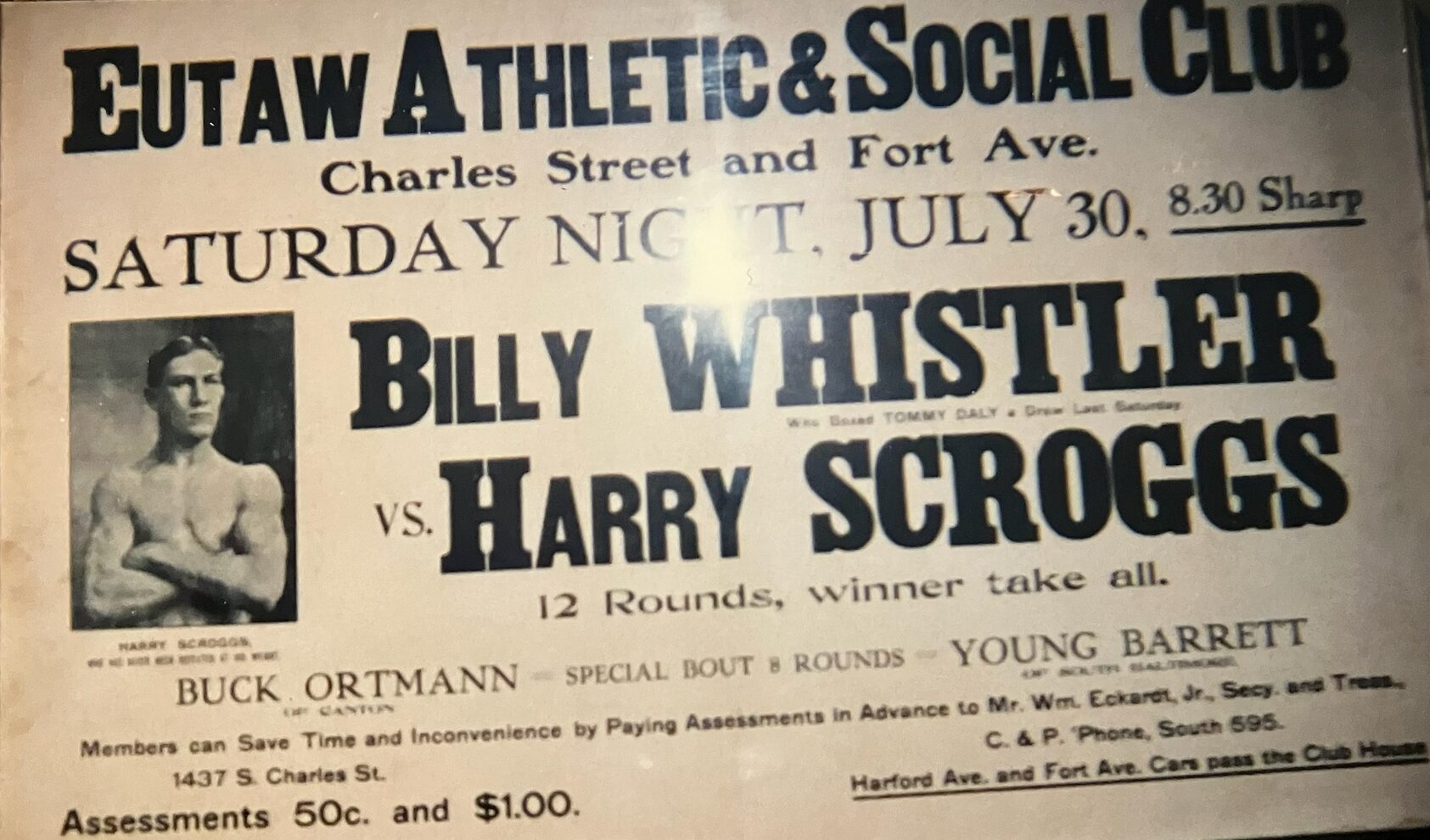
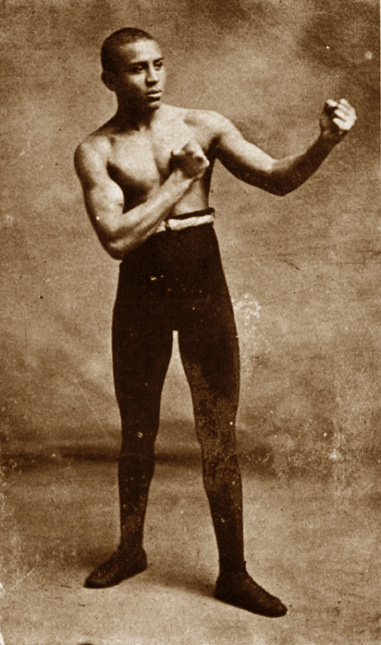
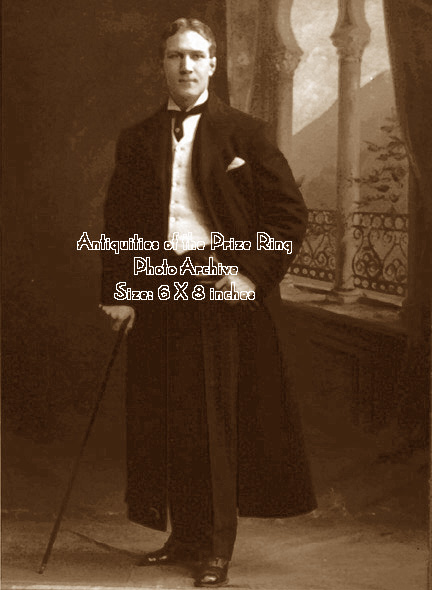
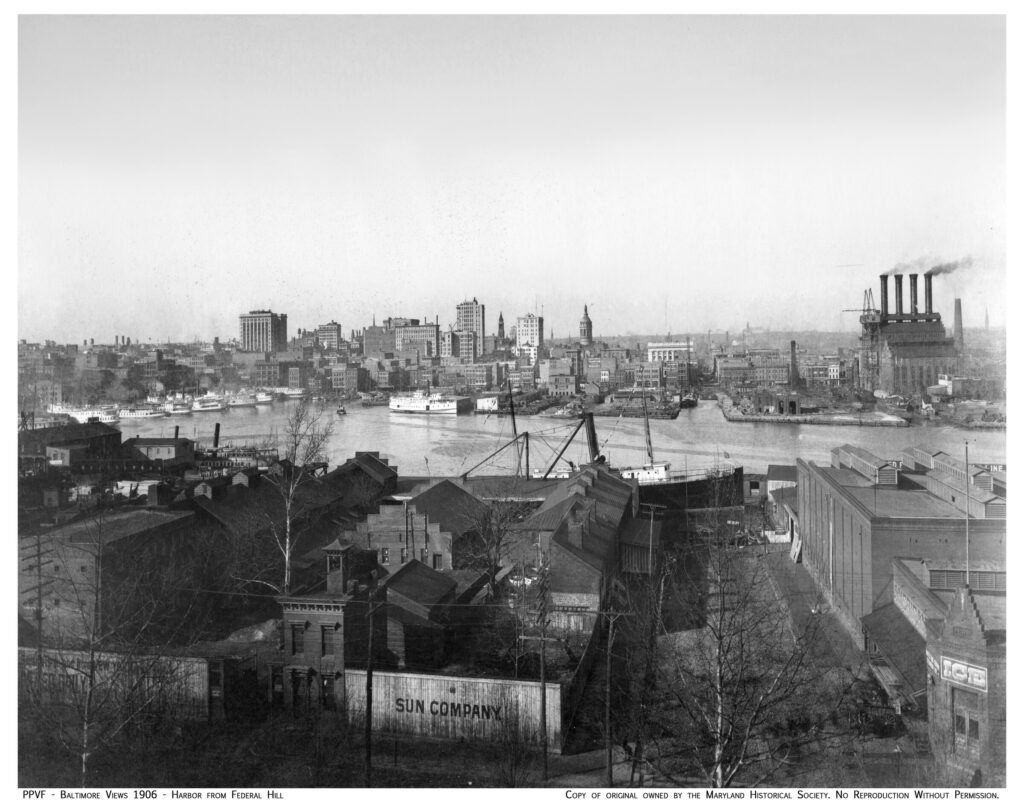
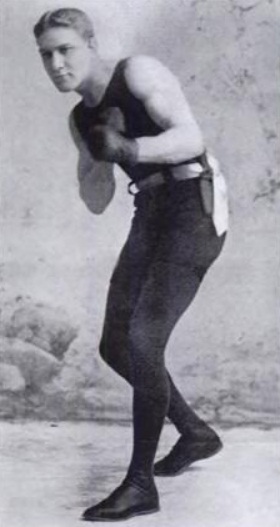
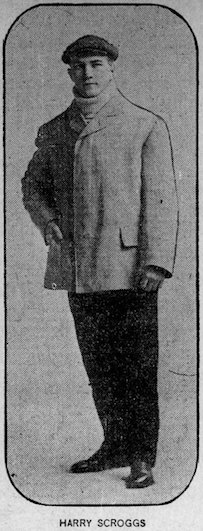
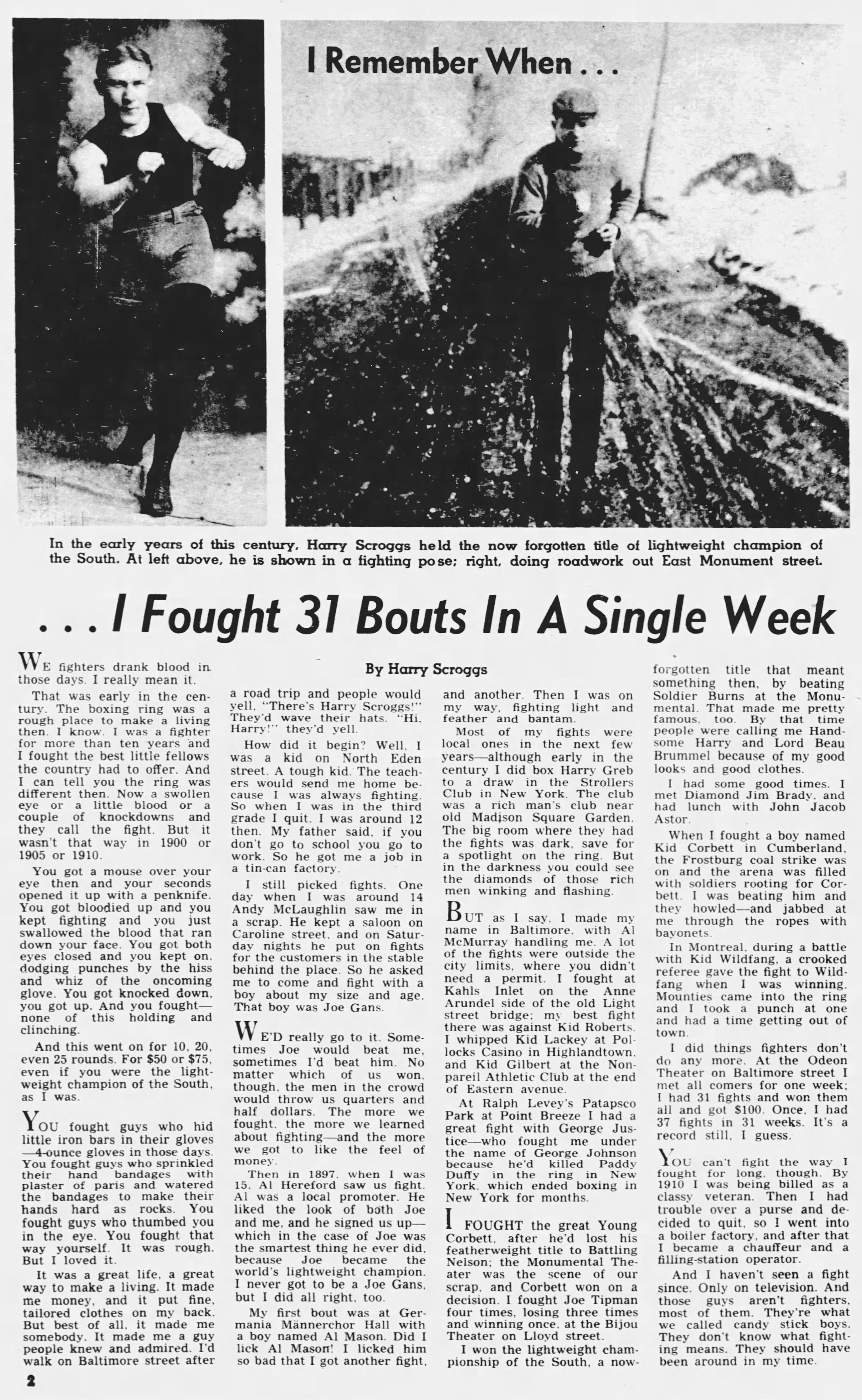
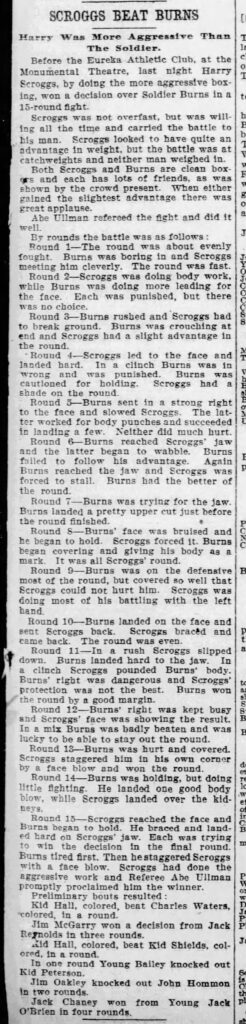
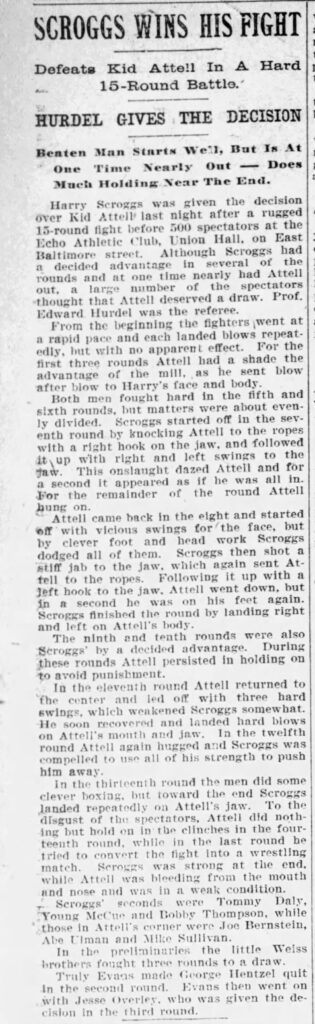
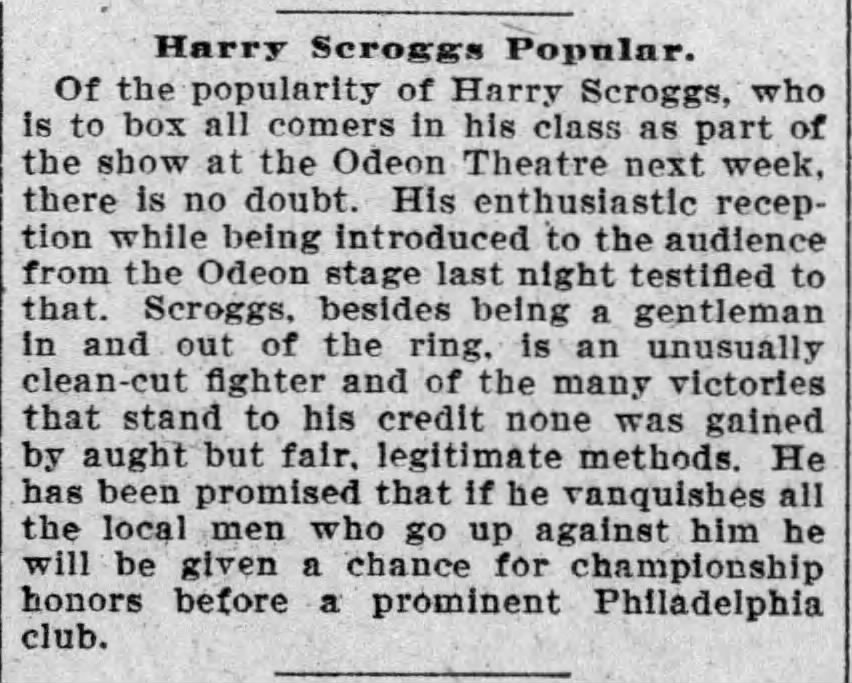
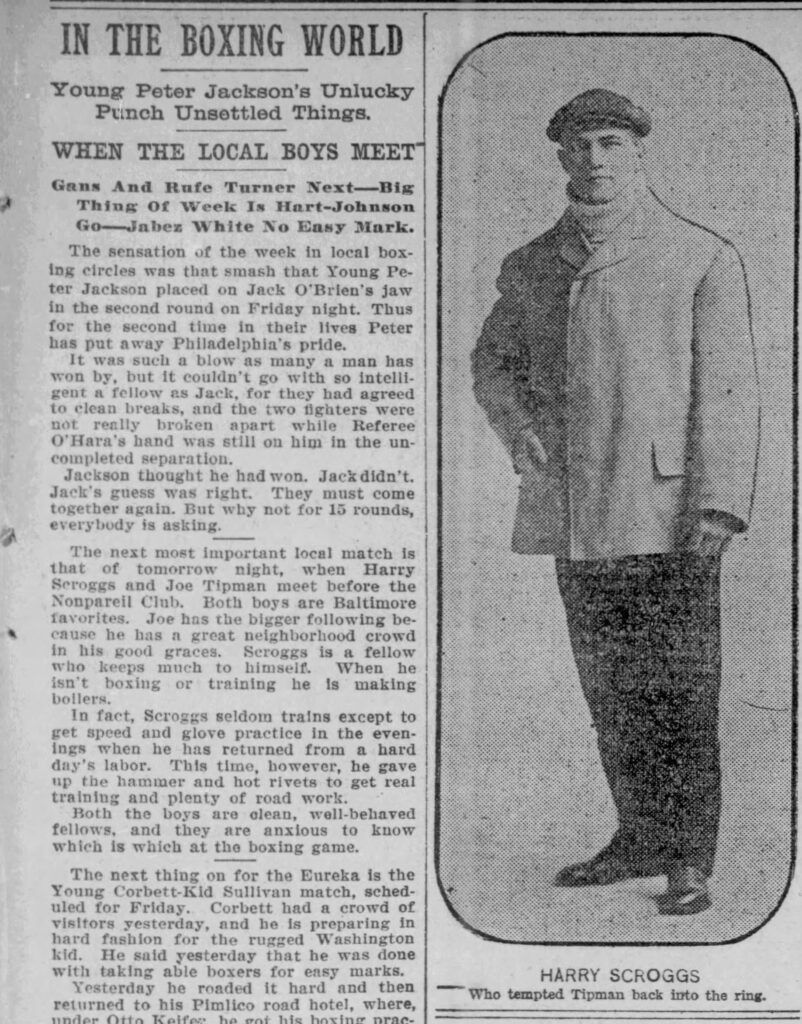
Instead of a completely factual and research focused article, this time I’m taking a risk and giving you a very rough excerpt of something I worked on over summer vacation. When I research, I try desperately to put myself in my ancestors shoes and fill in the blanks when I don’t know details—researching the time and place to help at least get me close to maybe what they experienced. For this ancestor, I wanted to put it in story form. I could have it completely wrong. I really don’t know. I based it off of first-hand accounts, newspaper articles, census records, city directories, etc. I found Thomas Scharf’s book Baltimore’s Boxing Legacy: 1893-2003 from Arcadia Publishing to be very insightful. I also added my own flare and assumptions on personality and how they interacted. Regardless, it’s a fun and imaginative exercise that gets my creative writing going—which doesn’t hurt a darn thing. Hope you enjoy this little vignette of the “based on truth” boxing days of my great-great grandfather, Harry Edward Scroggs (1883-1971).
Harry threw a defensive jab at the Mountie towering over him. The place was in an uproar and the crooked ref that gave Kid Wildfang the decision was nowhere to be found. Harry’s quick feet and ability to anticipate his opponent’s next move allowed him to execute his last punch effectively and dart under the ropes of the ring to find the nearest exit—his handlers not too far behind.
He was small enough to have been a jockey, but fighting came naturally to him and he couldn’t fathom doing anything else. Grace was waiting for him just outside the theater. She was young, but wasn’t so naive that she made her way outside when she noticed the first signs of a brawl in the crowd were brewing. “Ag! We better get moving or we’ll have the whole lot of lumberjacks on our tails.”
“I can’t believe he gave it to that brut, Harry, you had him in every round!”
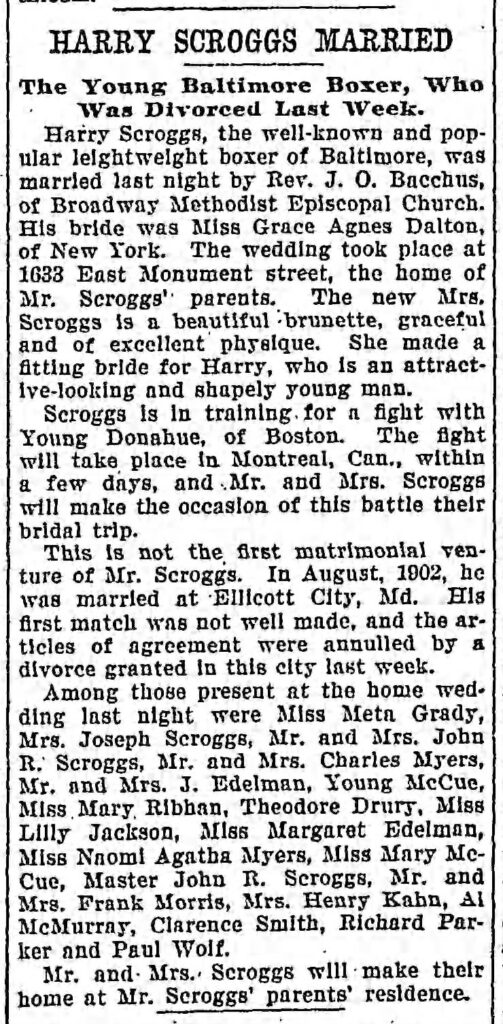
“That’s what I get for trying to make a honeymoon out of a match, I guess.” They kept moving, taking the side alley to avoid the crowd. “I’ll make it up to you, Aggie.” Grace Agnes Dalton, originally from New York, was Harry Edward Scroggs’s new bride. He wondered if she was fully aware of what she was getting into.
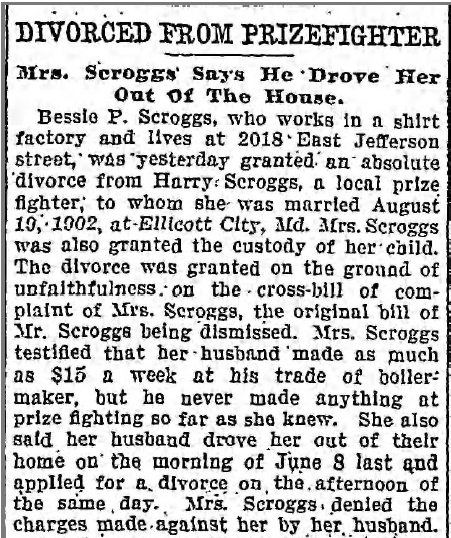
The divorce from Bess was finalized the week before, and the judge gave her custody of their young son, Harry Jr. He was a happy kid, always smiling, they had nicknamed him “Hap”. And now he didn’t know if he’d see his three year old for a while. He didn’t see him much already, come to think of it. Bess should have been as happy as Hap—prizefighting brought them rent and food and clothing—even expensive toys for the young boy, things that other lads didn’t have just on a boilermaker or shirtmaker’s wage.
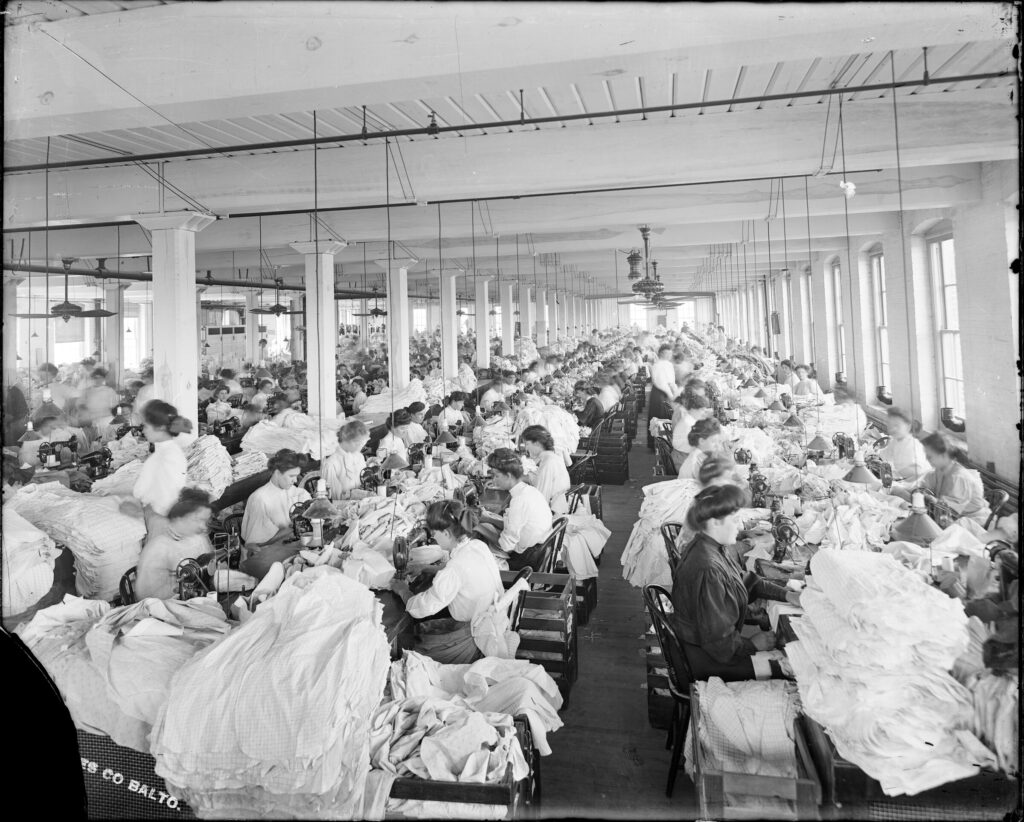
Maybe it just hadn’t been a good match, maybe they were too young, or maybe the pressure of regional fame from his prizefighting was too much for their fragile union. They met at the shirt factory, or was it at Sunday services? Her family seems to have always been in Baltimore, just like Harry’s.
The youngest daughter of an ice wagon driver and iron puddler, Bess Pearl Keller had a spitfire spirit and a beautiful voice. Harry got to stand behind her during church choir, he a tenor, she an alto. How much fun he had teasing her, seeing if she would notice him lightly tugging on her hair and then playing the innocent when she got wise, whipping around to confront the charming handsome boy who was ready to be in playful denial. It wasn’t a secret she liked his attention, and he liked how fun loving she was. Free with her laughter—not like the other stuffy girls in the congregation or at work. She wasn’t a striking beauty, but something about her, her mischievous eyes and generous smile made him want to spend more and more time with her, despite his responsibilities at home, at work—and more recently—in the boxing ring.
He had quit school five years earlier, and had been training since being signed as a new featherweight for promoter Al Hereford. Now 18, he took whatever matches came his way from Al. He was tired of the small time, and wondered if he could get out from the same rough crowds, little pay, and definitely no mention in the headlines. Joe had done it, so surely the scrappy and determined Scroggs could. They started around similar ages and were matched up against each other in the dirty stables behind Andy McLaughlin’s saloon on Caroline Street. There, they learned to love the cheering, the sound of their own names, and the feel of money.
But Joe wasn’t just Joe anymore, he was Joe Gans, Lightweight World Champion of 1902. The first Baltimorean to do it. Some guys had a problem fighting Joe, him being colored and all, but Harry liked Joe’s style, and he learned from him. Joe was respectable, confident yet humble—a real athlete—not one of those guys that snuck iron bars into their 4oz gloves, or “bandaged” their hands in wet plaster of paris to knock out your teeth or break your jaw. Gans was the kind of boxer anyone serious about the fistic arts would strive to be like. Harry was no different.
And now it was his goal to fight all the men who thought they could best Joe and failed. That, and the obvious goal of money. Maybe he and Bess could make it together and he could buy her fine dresses and hats and he could get a tailored suit and quit the miserable clothing industry conditions. Both of them could quit.
A young romance quickly went from exciting to reality when Bess yanked opened her heavy front door one humid August morning, panicked, and looking as if all the usual contagious energy that gave her a warm rosy glow had been completely drained from her face. The suctioning force of the door opening almost took his breath away—he hadn’t even knocked yet. She had been waiting for him to arrive since she was up and dressed at dawn, unable to get a full night’s sleep.
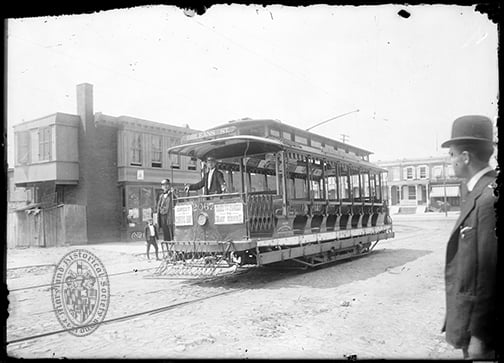
Already sweating from the Mid Atlantic summer air, Harry wiped his forehead with his handkerchief. Each morning he walked to her house on Jefferson from his folk’s place on Eden Street so they could catch the street car to work at the shirt factory together.
“What is it, Bess? What’s wrong?”
“You have to marry me, Harry.” She stepped out on the stoop of the row house and shut the door behind her, grabbed his hand and continued down the steps, pulling him behind her along the uneven cobbled road. She hoped to avoid the prying eyes of her older sisters and recently widowed mother.
“What? I mean, I will, I want to ask you eventually…Bess, stop. What’s the hurry, you know I haven’t gotten the break I wanted yet but Al says…”
“Forget Al, forget fighting, Harry. I’m late.”
Harry, mouth open and genuinely perplexed, didn’t have time for another word. She had plenty enough for the two of them. Frantically, they continued down to the street car stop, her heel catching a stone but not breaking her stride or her ranting.
“Harry. I’m pregnant. That’s what. What are we gonna do? Well, here’s what we’re gonna do First, we’re going to get married. As soon as we can. I can’t let Mother and my sisters know. Especially Ida, she warned me this would happen, I don’t need her shamin’ me. Or your sisters. Oh God. Or your mother. We’ll elope—we’ll get to the justice of the peace in Ellicot…”
“Bessie.”
“…but then what are we gonna do after that? We will have to find a place of our own, then I can’t work, and you’ll just have to work at the factory more—maybe the boiler factory, I hear they pay a few cents more a week…”
“Bess.”
“…forget your punchin’ training and all the hollerin’ them boys do…”
“Bessie Pearl! Woman, slow down! Stop! What are you talking about?” Harry made an abrupt halt that stopped the whirlwinded young woman in her tracks.
“I can’t quit boxing. I’m so close to getting a real name for myself. Al got me a match with Mason and Bernstein after that. I ain’t quittin’.”
She looked hurt. He pulled her gently onto the walkway and off the street, just at the end of the block of rowhouses.
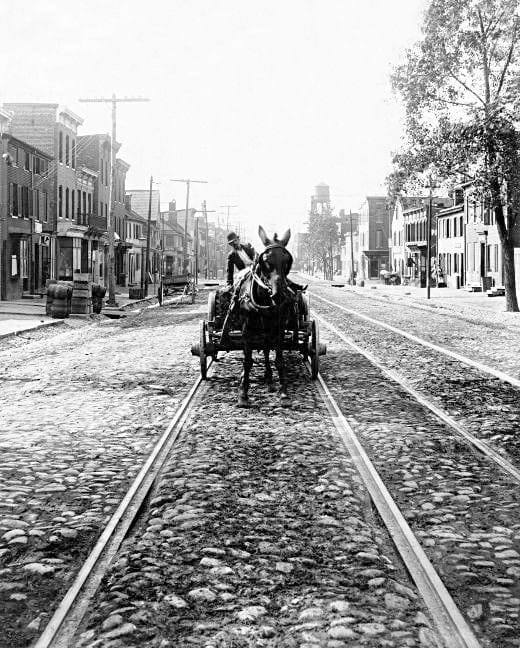
People and horse drawn wagons were starting to accumulate, headed to work in the harbor or in one of the many industrial mills of Baltimore. Salty, fishy, metallic, and smoky. It was the smell and the taste of the Monumental City.
“But how are we supposed to…”
“It’ll be alright. Look, I’ll propose to you right now.” Bess didn’t crack a smile and leaned against the brick sided wall of the corner lot, defeated, but also relieved to hear him talk like he would stay with her.
“We’ll tell our folks tonight that we don’t want a big ordeal, so we’re plannin’ to elope in a few weeks. We don’t need to say nothing about—” he thought a moment on how to put it—”about your condition. We’re old enough so we don’t need consent from them neither.”
“That’s not soon enough, Harry! And when I have this huge belly and a baby by Christmas? All that talk from those church ladies who got nothing better to do…and what about your mother…I know she disapproves of me as it is.”
“They can judge us, I don’t care.”
Bess got quiet.
“But I don’t know if I can give birth—to a baby—Harry, what if I don’t make it? And I’m not at all like Mother or Ida, I don’t feel motherly…”
“You’ll make a fine mother, Bessie. And this little chap—well, if he’s a he—even if it’s a she—they will have a soon-to-be famous boxer for a pop! We can name him Harry or her Harriet…or a name from your family?” She didn’t seem convinced as he tried desperately to draw some positive reaction from her.
“I’m afraid.”
He had never heard her say those words before. Nothing scared Bess Keller. He thought of all the dares he witnessed her take from their friends. She was possibly tougher than he was and he was one with the wicked left hook.
“Marry me?” he asked. Bess stared at the ground, then at Harry.
She tried to say “Yes” but the lump in her throat prevented the sound. She tried again.
“Yes. Yes, I’ll marry you.”
Harry smiled a tight-lipped but sincere smile at his new fiance and they continued down the next block to catch the modern streetcar that took them the closest to work. The familiar sounds of wagon wheels, clip clopping hooves, whistles, the streetcars screeching on their metal tracks, and the diverse crowds of Baltimoreans shouting (not always successfully) above it all. The markets began opening their store fronts and drawing up their awnings for the day.
*
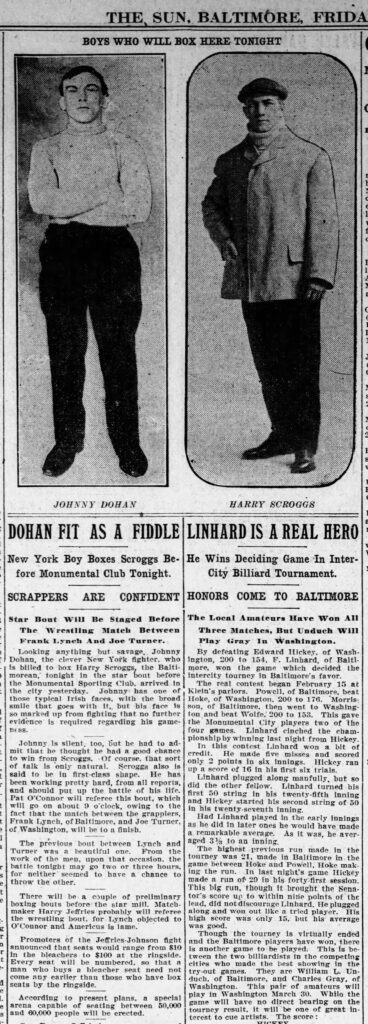
Four years later they would both find comfort and company with different people. By then, with Harry’s fame as the Featherweight Champion of the South, their dramatic parting was blasted in The Sun for all of Baltimore to learn of. Getting away from the local gossip and going to Montreal for his next fight was just what he needed. What he didn’t need was the unfair officiating or unruly tactics of Wildfang. Too bad he hadn’t gotten that ugly mug with his wallop of an uppercut— the punch he threw that should have been the KO to end the bout. Five lousy rounds and an overall disappointing outing in Quebec. At least he has his new adoring wife.
He nodded to his seconds as he grabbed Grace’s hand. “See you boys back in Baltimore.” The newlyweds made their way to the hotel, gathered their things and headed to the train station.

Thanks for reading. If you want to read something more polished and published, check out The Record Keeper!